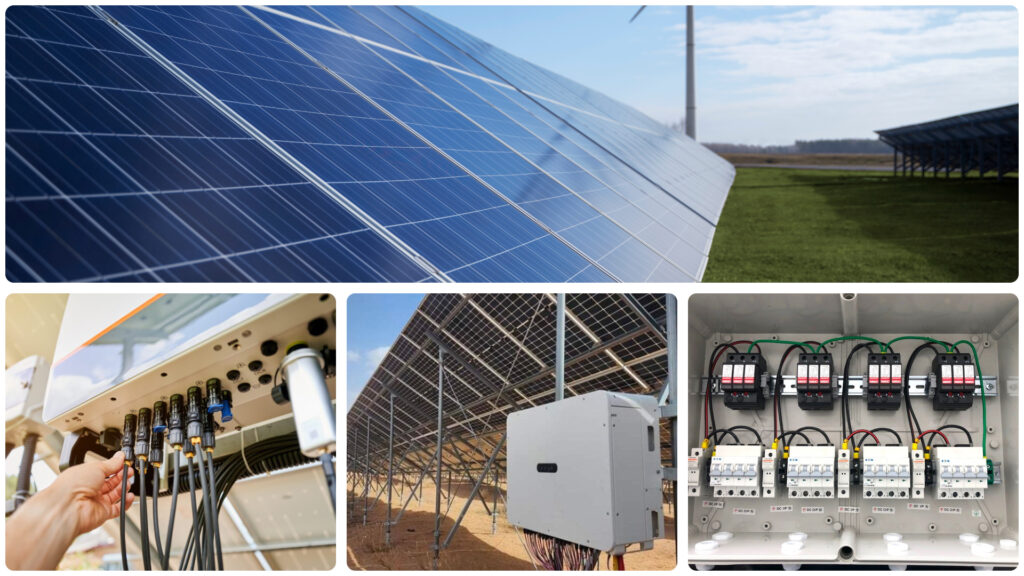

Areas to work for solar power system installation include residential rooftops, commercial buildings (including façades, green roofs, and parking lot canopies), and large ground-mounted solar farms. Within these sites, professionals install panels, mount structures, run wiring, and perform tasks like electrical connections, earthing, and system commissioning.
Residential
- Rooftops: The most common area, where installers mount panels on existing or new roofs to receive maximum sunlight.
- Ground mounts: Used when rooftops are not practical, utilizing open ground space or attached to other structures.
- Carports: Installing panels on the roofs of carports to provide shade while generating power.
Commercial and Industrial
- Building integration: Mounting panels on the exterior of buildings (faciades) or on green roofs to generate power and improve insulation.
- Parking lot canopies: Installing panels over parking lots to provide shade and generate electricity.
- Infrastructure: Solar-powered street lights and solar-integrated noise barriers are also areas for installation.
Large-scale projects
- Solar farms: Installing panels on large, open tracts of land, often requiring significant land preparation, strong foundations, and extensive wiring.
- Ground-mounted systems: Similar to solar farms, these can be large installations for commercial use, requiring land that can be cleared, leveled, and potentially fenced